
© Copyright 2025 SouthernCE LLC- All Rights Reserved
Category: Inspiration Essay
Destination: Kamnik-Savinja Alps, Slovenia
Best Time to Visit: May–September (for warm weather and festivals)
Focus: Slow travel, rural life, and Slovenian traditions
Read Time: 7–10 minutes
Arriving in the Alps: A World Apart
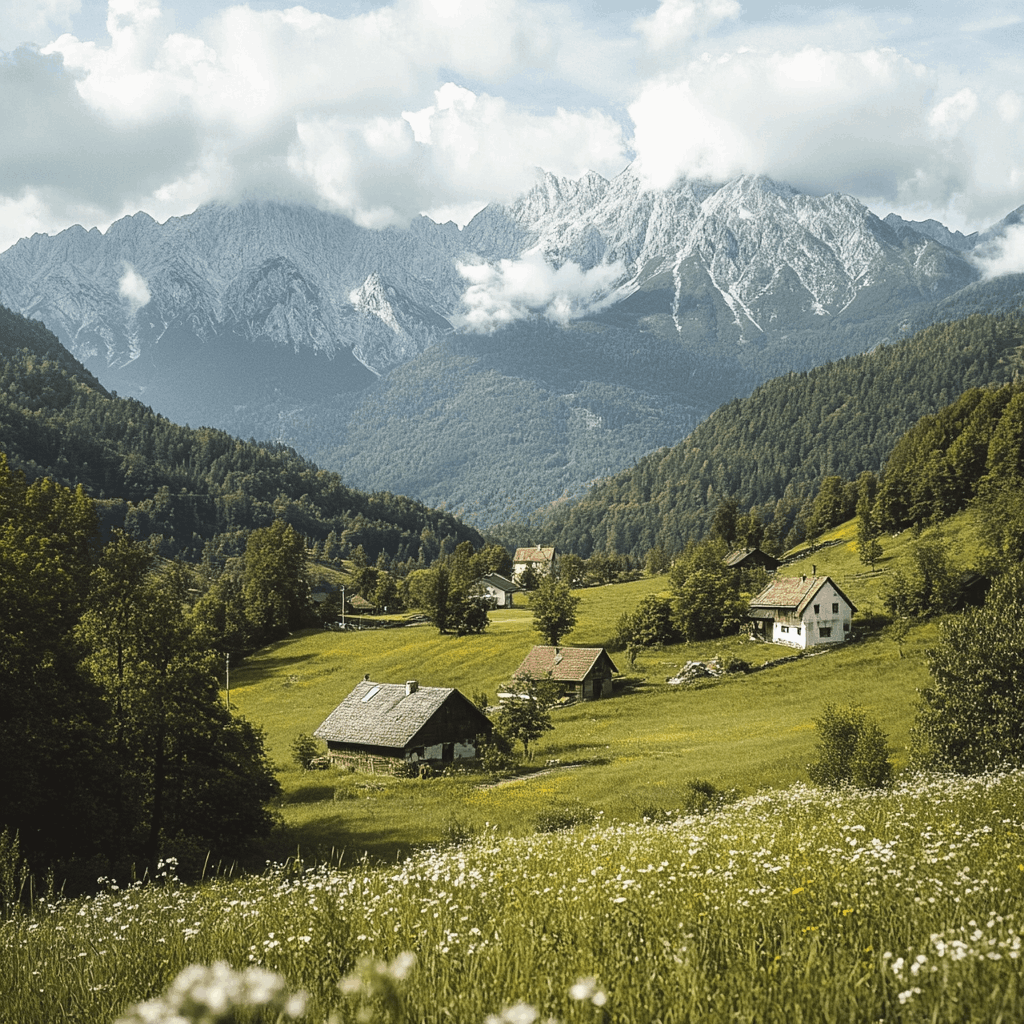
My first morning in Luče, a tiny village nestled in the Kamnik-Savinja Alps, started with a rooster’s crow and the scent of woodsmoke. The guesthouse, a creaky wooden home run by a family who’ve lived here for generations, felt like stepping into a storybook. Breakfast was a spread of homemade treasures: warm bread, butter churned that morning, and honey from bees buzzing in nearby meadows. The host, Ana, poured me coffee and told me about her grandmother’s recipe for potica, a nut-filled pastry that’s practically a Slovenian religion. It’s these moments—small, unscripted—that make you realize you’re not just visiting a place but living it.
Luče is the kind of village where everyone knows your name by day two. The streets, if you can call them that, are more like paths winding past stone houses and barns stacked with hay. The Savinja River gurgles nearby, its water so clear you can see pebbles glinting like jewels. The Alps loom overhead, their peaks sharp against the sky, and every view feels like a painting you want to step into. Slow travel here means letting go of plans and letting the rhythm of the village guide you—whether it’s joining a neighbor to gather herbs or just sitting on a bench, watching clouds drift over the mountains.
Traditions That Tie the Past to the Present
Slovenia’s rural life is steeped in traditions that feel timeless, like they’ve been polished by centuries of care. One afternoon, I stumbled into a village festival in Solčava, where locals in embroidered vests played accordions and danced polkas under a canopy of linden trees. The air smelled of grilled sausages and štruklji—dumplings stuffed with cheese or tarragon that are a Slovenian obsession. Kids ran around with wooden toys, and an old man offered me a sip of his homemade schnapps, winking as he warned me it was “strong like our mountains.”
These festivals aren’t staged for tourists; they’re the heartbeat of the community. I watched women weave wool into intricate patterns, a craft passed down through generations, and learned about the “bicka,” a mythical cow from local folklore said to roam the Alps. Later, at a small farm, I tried my hand at milking a goat—spoiler: I was terrible, but the farmer’s laughter made it worth it. These traditions, from baking bread in wood-fired ovens to singing folk songs at dusk, aren’t just relics; they’re alive, tying the past to every smile and story shared over a glass of Cviček wine.
Landscapes That Speak to the Soul
The Kamnik-Savinja Alps are a love song written in green valleys and jagged peaks. One morning, I hiked a trail to the Logar Valley, a place so stunning it feels like the earth is showing off. Meadows burst with wildflowers—purple clover, yellow buttercups—and the air was thick with the hum of bees. The Rinka Waterfall, a 90-meter cascade, roared at the valley’s end, its mist catching rainbows in the sunlight. My guide, Marko, pointed out alpine herbs used in local teas and told stories of shepherds who’ve tended flocks here for centuries.
Another day, I wandered to Velika Planina, a high plateau where herders’ huts dot the landscape like something from a Heidi novel. The wooden roofs creaked under the breeze, and cows grazed with bells that sounded like a symphony. It’s the kind of place where you sit on a rock, breathe deeply, and feel the world slow down. These landscapes don’t just impress—they settle into your bones, reminding you that beauty doesn’t need to shout to be profound.
The Gift of Slow Travel
Slow travel in these villages is like a reset button for the soul. There’s no rush to check off sights; instead, you’re invited to linger. One evening, I sat with a family in Solčava, sharing a meal of buckwheat žganci (a polenta-like dish) and roasted lamb. We talked about everything from the weather to their hopes for their kids, and I realized this was the real Slovenia—not the postcard, but the people. Another day, I helped a local stack firewood, my hands smelling of pine, and felt more connected to this place than any museum could manage.
The simplicity here isn’t empty; it’s full of meaning. It’s in the way a farmer waves as you pass, the crunch of leaves on a forest path, or the taste of honey that’s never seen a supermarket. Slow travel lets you notice these things—the small, quiet moments that stitch a trip into your memory. In the Kamnik-Savinja Alps, you don’t just see Slovenia; you feel it, and it feels like home.
Tips for Your Own Village Journey
Pack for Comfort: Bring sturdy shoes for trails and a light jacket for cool evenings (even summer can dip to 10°C).
Cash for Locals: Village shops or festivals often take cash only—keep €20–30 handy.
Learn a Few Words: A “hvala” (thank you) or “dober dan” (good day) goes a long way with locals.
Bring a Journal: You’ll want to jot down thoughts or recipes—these moments are worth remembering.
Respect the Quiet: Villages are peaceful, so keep noise low, especially at night.
The Kamnik-Savinja Alps taught me that the best journeys aren’t about how far you go, but how deeply you connect. These villages, with their traditions and landscapes, are a reminder to slow down, breathe, and let the world surprise you.
For more Slovenian adventures, our Three Days in Coastal Slovenia tour takes you to the sun-kissed shores of Piran, where seafood and caves await—perfect for your next escape!
© Copyright 2025 SouthernCE LLC- All Rights Reserved